Canadian Universities & Colleges for IT Education
Browse over 130 accredited institutions across every province offering programs in software development, cybersecurity, data science, and more. Compare tuition, co-op options, and PGWP eligibility in one place.
Colleges vs. Universities: What Matters for IT Students
Canada's post-secondary system splits into two distinct streams, and the distinction carries weight beyond branding. Universities — institutions like the University of Toronto, the University of British Columbia, and the University of Waterloo — grant bachelor's and graduate degrees. Their computer science and software engineering programs typically run four years, lean heavily on theory and research, and often include mandatory co-operative education terms that place students at employers like Shopify, OpenText, or RBC's technology division.
Colleges and polytechnics — Seneca, BCIT, SAIT, Humber — focus on applied learning. Their IT diplomas and advanced diplomas run one to three years, prioritise hands-on lab work and industry certifications, and typically cost less per year than university tuition. For international students, the critical differentiator is not prestige but PGWP eligibility: programs at Designated Learning Institutions (DLIs) lasting at least eight months qualify you for a post-graduation work permit, provided the credential is issued by the institution itself rather than a private partner.
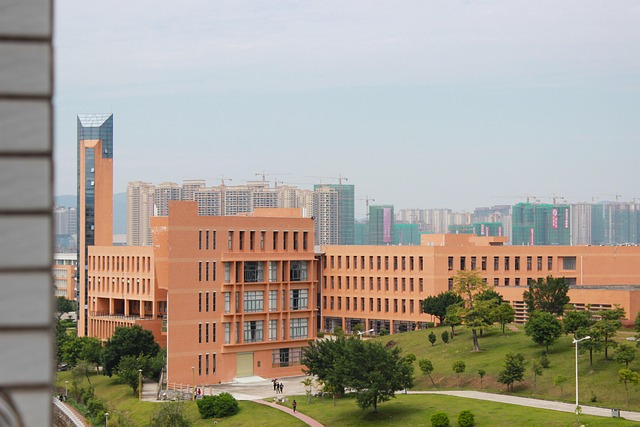
Explore Institutions Across Canada
Each province offers a distinct mix of institutions, tuition structures, and provincial nominee pathways. Ontario and British Columbia have the largest concentration of IT programs, but Alberta, Quebec, and the Atlantic provinces present lower tuition and emerging tech hubs.
Ontario
45+ IT institutionsHome to the Toronto-Waterloo tech corridor — the densest concentration of tech employers in Canada. The University of Waterloo's co-op programme remains the gold standard, sending students to Silicon Valley firms each term. Seneca Polytechnic, George Brown College, and Humber College offer applied diplomas and advanced diplomas that feed directly into Ontario's PGWP-eligible pipeline. Tuition for international students ranges from CAD $16,000 to $42,000 per year depending on the institution and credential level. Ontario's Provincial Nominee Program (OINP) includes a dedicated Masters and PhD stream, plus an Employer Job Offer stream that covers NOC-coded IT positions.
British Columbia
25+ IT institutionsVancouver's tech sector is anchored by Amazon, Microsoft, and Electronic Arts offices. UBC and Simon Fraser University run top-tier CS programmes, while BCIT's applied technology diplomas are among the most employer-respected in the country.
Alberta
18+ IT institutionsCalgary and Edmonton are experiencing rapid tech sector growth. The University of Alberta's AI programme ranks among the world's top ten thanks to its Amii research lab. SAIT and NAIT offer cost-effective applied diplomas with strong local employer pipelines.
Quebec
20+ IT institutionsMontreal's AI corridor hosts Mila — one of the world's largest deep-learning research centres. McGill and Université de Montréal offer cutting-edge CS programmes, while Concordia provides English-language options. Lower tuition relative to Ontario remains a notable draw.
Atlantic Provinces
15+ IT institutionsNova Scotia, New Brunswick, PEI, and Newfoundland offer lower tuition and living costs, plus favourable immigration pathways through the Atlantic Immigration Program. Dalhousie, UNB, and NSCC run competitive IT programmes with smaller class sizes.
Top IT Institutions at a Glance
A curated selection of institutions recognised for their IT program quality, employer partnerships, and graduate outcomes. Tuition ranges reflect international student fees for the 2025–2026 academic year.
| Institution | Province | Type | IT Programs | Intl. Tuition (CAD/yr) | Co-op |
|---|---|---|---|---|---|
| University of Waterloo | Ontario | University | 12 | $38,000–$42,000 | Mandatory |
| University of Toronto | Ontario | University | 15 | $40,000–$45,000 | Optional |
| BCIT | British Columbia | Polytechnic | 18 | $18,000–$24,000 | Included |
| Seneca Polytechnic | Ontario | College | 14 | $16,000–$20,000 | Optional |
| University of Alberta | Alberta | University | 10 | $28,000–$34,000 | Optional |
| SAIT | Alberta | Polytechnic | 9 | $17,000–$22,000 | Included |
| McGill University | Quebec | University | 8 | $30,000–$38,000 | Optional |
| Dalhousie University | Nova Scotia | University | 7 | $22,000–$28,000 | Available |
Tuition data reflects international student fees for 2025–2026 academic year. Confirm directly with institutions for current figures.
How to Choose the Right Institution
Ranking lists tell one story. These five factors tell the rest — and they are the ones that actually determine whether your investment pays off.
-
01
Verify DLI and PGWP Eligibility
Not every campus or credential qualifies for a Post-Graduation Work Permit. Some institutions are DLI-designated, but their private partner-delivered programs are not PGWP-eligible. Check the IRCC DLI list, then confirm with the specific program's admissions office. This single step eliminates the most common — and most costly — mistake international students make.
-
02
Evaluate Co-op and Work-Integrated Learning
A co-op term does more than add a line to your resume. It generates Canadian work experience that counts toward Express Entry points, builds your professional network before graduation, and often leads directly to a full-time offer. Check whether co-op is mandatory or optional, how many terms are included, and which employers the institution partners with.
-
03
Compare True Cost — Not Just Tuition
Tuition is only part of the equation. A CAD $20,000-per-year program in Halifax with monthly rent of $900 may actually cost less over two years than a CAD $16,000 program in Toronto with $1,800 monthly rent. Factor in health insurance, textbooks, transit, and food. Our tuition calculator handles this arithmetic for you.
-
04
Assess Local Job Market Alignment
Studying cybersecurity in a province with a growing fintech corridor (Alberta, Ontario) gives you better practicum options than studying the same subject in a region where those employers are sparse. Match your target NOC code to Statistics Canada's labour force data for the CMA (Census Metropolitan Area) where you plan to study.
-
05
Check Provincial Nominee Program (PNP) Streams
Each province runs its own PNP with streams designed for graduates of local institutions. Ontario's OINP has a Masters Graduate Stream. BC's PNP includes a Tech Pilot with accelerated processing for specific NOC codes. Alberta's AAIP favours graduates with local job offers. Your choice of province can shave months — or years — off your permanent residency timeline.
Compare Institutions With Hard Data
Our comparison tool eliminates the tab-switching gymnastics of researching multiple institutions simultaneously. Stack up to four colleges or universities side by side and compare tuition, program duration, co-op structure, PGWP eligibility, class sizes, and graduate employment rates — all sourced from institutional disclosures and provincial reporting frameworks.
Pair it with the tuition calculator to model your total cost of attendance across different cities, and use the scholarship finder to surface bursaries specific to each institution. These tools are free to use and require no account — just your research goals.
What Sets Canadian IT Institutions Apart
Co-operative Education
Canada pioneered the co-op education model, and IT programmes here integrate paid work terms more systematically than almost anywhere else. A typical co-op cycle alternates four-month study and work terms, placing students at employers ranging from startups to banks. Waterloo's programme alone sends students to over 7,100 employers globally.
Industry Certifications Bundled
Many college-level IT programmes embed vendor certifications directly into their curriculum. Graduating from BCIT's networking programme, for example, means you also leave with Cisco CCNA preparation built into your coursework. This dual-credential approach saves graduates thousands of dollars and months of independent study.
Immigration Pathway Integration
Canadian institutions sit at the intersection of education and immigration policy. A DLI-designated program of at least two years qualifies you for a three-year PGWP. Many provinces have graduate-specific PNP streams. Some institutions even have dedicated immigration support offices that help students navigate the study-to-PR pipeline.
Research-Industry Bridges
Canada's three national AI institutes — Vector (Toronto), Mila (Montreal), and Amii (Edmonton) — maintain direct partnerships with university CS departments. Graduate students often work on industry-sponsored research projects, giving them publication credits and professional connections before they even enter the job market.
Scholarship Ecosystems
Beyond headline scholarships, most institutions maintain departmental bursaries, entrance awards, and need-based grants that are under-advertised. BCIT's Foundation awards over $1.5 million annually. Seneca's international student bursaries can offset $3,000 to $5,000 per semester. Our scholarship finder surfaces these opportunities by institution.
Global Recognition
Canadian IT credentials carry weight internationally. The University of Toronto, UBC, and McGill consistently rank in the global top 50 for computer science. College-level credentials from BCIT and Seneca are recognised by employers across North America. This portability means your investment is not location-locked.
I narrowed my shortlist to three institutions using the comparison tool — BCIT, Seneca, and Humber. What clinched it was seeing that BCIT embedded Cisco and AWS certifications into the networking curriculum, which meant I would graduate with two industry credentials in addition to my diploma. The $4,000 I saved by not paying for separate certification exams covered almost an entire semester's living expenses in Burnaby. Within three months of completing the programme, I had two job offers from managed service providers in Vancouver. The co-op term had given me a direct reference from my supervisor, which both employers specifically asked about during interviews.
Typical Application Deadlines
Deadline structures vary between universities and colleges. Universities generally use firm cut-offs; colleges often accept applications on a rolling basis until seats fill. International students should apply at least six to nine months ahead to allow time for study permit processing.
Fall Intake
Applications open Oct–Nov. University deadlines: Jan–Mar. College rolling admission until May–Jun.
Winter Intake
Available at most colleges and some universities. Applications typically due by Sep–Oct of the prior year.
Summer Intake
Less common and offered primarily at colleges for select programs. Applications due Jan–Feb.
Study Permit
Processing times vary by country. Apply as soon as you receive your Letter of Acceptance. Budget extra time for biometrics.
Need Help Choosing an Institution?
Our consultation team includes former college admissions officers and RCIC-registered immigration consultants who understand the differences between institutions that matter most — DLI status, co-op quality, provincial nominee alignment, and real employer demand. Share your goals, and we will respond within one business day with a tailored shortlist.
Ready to Start Your IT Education Journey?
Explore our full program catalogue, use the comparison tools to build your shortlist, or request a free consultation with our team. Every step of the process — from research to application — is covered.